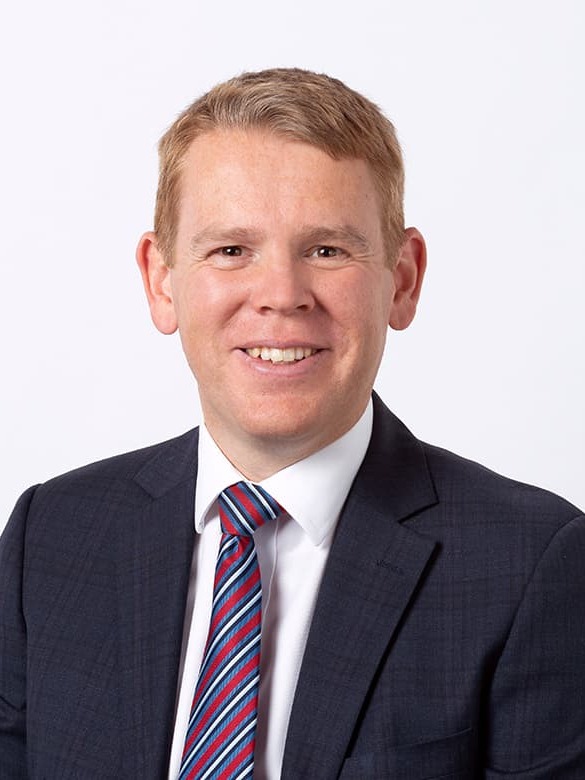
Chris Hipkins' Leadership: Navigating New Zealand's Political Landscape as Jacinda Ardern's Successor
In the dynamic realm of New Zealand politics, few figures have embodied the spirit of diligent public service and rapid adaptation quite like Chris Hipkins. His journey from a dedicated Member of Parliament to the nation's Prime Minister and now Leader of the Opposition offers a compelling narrative of resilience and leadership. This article serves as a comprehensive "Chris Hipkins Wiki," detailing his significant ascent as Jacinda Ardern's successor as Labour Chief, his time at the helm of government, and his current role in shaping New Zealand's political discourse.
Often characterised by his pragmatic approach and a knack for problem-solving, Hipkins stepped into the spotlight at a pivotal moment for the Labour Party and the country. His leadership style, distinct yet complementary to his predecessor, has left an indelible mark on New Zealand's contemporary political history.
The Path to Leadership: From Remutaka MP to Labour Chief
Chris Hipkins' political career is marked by a steady rise, built upon a foundation of consistent electoral success and an increasing portfolio of responsibilities. His long tenure as an MP provided him with invaluable parliamentary experience, preparing him for the weighty roles he would eventually undertake.
A Steadfast Member of Parliament
Since November 8, 2008, Chris Hipkins has served as the Member of Parliament for Remutaka, a testament to his enduring connection with his constituency and his consistent commitment to public service. His electoral history is one of repeated mandate, having been successfully re-elected on November 26, 2011, September 20, 2014, September 23, 2017, October 17, 2020, and most recently, October 14, 2023. This sustained support underscores his effectiveness as a representative and his ability to resonate with the needs and aspirations of his local community.
Over these years, Hipkins has been an active participant in the 49th, 50th, 51st, 52nd, 53rd, and 54th legislatures, consistently advocating for Labour Party principles and contributing to national policy-making. His longevity in Parliament equipped him with a deep understanding of legislative processes and the complexities of governance, making him a seasoned voice within the Labour caucus.
Stepping into Jacinda Ardern's Shoes
The political landscape of New Zealand underwent a significant shift on January 22, 2023, when Chris Hipkins ascended to the leadership of the Labour Party. This crucial transition followed the unexpected resignation of then-Prime Minister Jacinda Ardern, who had led the party to a historic majority and global acclaim. Hipkins, having been a loyal and highly effective minister under Ardern, was seen as a safe and experienced pair of hands to guide the party forward.
Taking over from a leader of Ardern's international stature presented both immense opportunities and significant challenges. Hipkins faced the task of not only maintaining party unity and morale but also of articulating a vision for New Zealand that built upon Ardern's legacy while addressing new and evolving national priorities. His elevation to Labour Chief marked the beginning of a new chapter for the party, positioning him as the designated successor to one of New Zealand's most popular Prime Ministers.
The Prime Ministership of Chris Hipkins: A Brief but Impactful Tenure
Just days after assuming the Labour leadership, Chris Hipkins was sworn in as the 41st Prime Minister of New Zealand. His tenure, though relatively short, was defined by a pragmatic approach to governance and a focus on addressing pressing domestic issues.
Taking the Helm
From January 25, 2023, until November 27, 2023, Chris Hipkins served as Prime Minister, leading the country through a period of economic uncertainty and social adjustments in the wake of the global pandemic. Alongside his premiership, he also took on critical ministerial portfolios, including Minister for National Security and Intelligence and Minister Responsible for Ministerial Services. These roles highlighted his extensive experience in government administration and his commitment to national stability.
His appointment saw him at the apex of New Zealand's executive power, serving under King Charles III as the reigning monarch and alongside Governor-General Dame Cindy Kiro. The Hipkins Government operated as a coalition, primarily with the Green Party, aiming to deliver on Labour's policy agenda while fostering cross-party cooperation.
Governing in Challenging Times
The Hipkins Government faced a complex array of challenges, from managing persistent inflationary pressures and the rising cost of living to addressing critical social issues such as housing and healthcare. Having just emerged from the demanding role of COVID-19 Response Minister, Hipkins inherited a nation grappling with the lingering effects of the pandemic and the need for economic recovery.
His leadership style as Prime Minister was often described as direct and action-oriented. He quickly pivoted the government's focus to "bread and butter" issues, attempting to simplify policy initiatives and demonstrate tangible progress for New Zealanders. Despite the brevity of his time as Prime Minister, Hipkins' administration worked to consolidate Labour's policy directions and prepare the country for future challenges, setting the stage for the subsequent general election.
Key Ministerial Roles Before the Top Job
Before his ascension to Prime Minister, Chris Hipkins honed his skills and reputation as a highly capable and reliable minister across several key portfolios, particularly during Jacinda Ardern's premiership. These roles solidified his image as a "fix-it" man within the Labour government.
Navigating the Pandemic: Minister for COVID-19 Response
Perhaps one of Hipkins' most defining roles was as the Minister for COVID-19 Response, a position he held from November 6, 2020, to June 14, 2022. This portfolio was created specifically for him, underscoring the government's trust in his ability to lead the national effort against the unprecedented global pandemic. Hipkins became the public face of New Zealand's COVID-19 strategy, regularly communicating complex health information, policy decisions, and lockdown measures to the nation. His calm demeanor and clear communication style were instrumental in maintaining public confidence during a period of immense uncertainty.
During his tenure, he oversaw the implementation of strict border controls, mass testing, contact tracing, and the nationwide vaccine rollout. The success of New Zealand's initial pandemic response, which gained international recognition, owes much to the diligent and steadfast leadership provided by Hipkins in this critical role. After guiding the country through the most intense phases of the pandemic, the portfolio was eventually passed to Ayesha Verrall.
Education and Police: Diverse Portfolio Experience
Chris Hipkins' ministerial career also encompassed other crucial areas, demonstrating his versatility and depth of understanding across different sectors. He served as the Minister of Police from June 14, 2022, until January 25, 2023, under Prime Minister Jacinda Ardern. In this role, he was tasked with overseeing law enforcement and addressing public safety concerns, taking over from Poto Williams before handing the reins to Stuart Nash. This position required a delicate balance of public reassurance and strategic oversight, further adding to his governance experience.
Moreover, Hipkins had significant stints as the Minister of Education and Minister for the Public Service. His time in the education portfolio saw him focus on improving educational outcomes, addressing sector challenges, and ensuring equitable access to learning for all New Zealanders. As Minister for the Public Service, he worked to ensure the efficiency, integrity, and effectiveness of the state sector, a foundational aspect of good governance. These diverse roles provided him with a comprehensive understanding of the machinery of government and the socio-economic fabric of New Zealand, crucial preparation for his future leadership roles. For more details on his extensive ministerial career, readers can refer to Chris Hipkins: NZ's Former COVID-19 Minister & Long-Serving MP.
Chris Hipkins Today: Leader of the Opposition
Following the 2023 general election, which saw a change in government, Chris Hipkins transitioned from Prime Minister to the Leader of the Official Opposition on November 27, 2023. In this capacity, he now leads the Labour Party from the opposition benches, with Christopher Luxon having become the new Prime Minister.
The role of Leader of the Opposition is foundational to a robust democracy. It entails scrutinising the government's policies and actions, holding ministers accountable, and presenting alternative policy solutions. For Hipkins, this new chapter represents an opportunity to rebuild and re-energize the Labour Party, articulate a clear vision for the future, and prepare for subsequent electoral contests. It requires a different set of leadership skills – not just governing, but also challenging, uniting the party, and connecting with the public from outside the executive branch.
Practical tips for an Opposition Leader, a role Hipkins is now mastering, often include:
- Effective Scrutiny: Developing clear, evidence-based arguments to challenge government policies.
- Policy Development: Articulating compelling alternative policies that address public needs.
- Public Engagement: Maintaining high visibility and connecting with diverse communities across the country.
- Party Cohesion: Uniting the parliamentary caucus and the wider party membership behind a shared vision.
- Strategic Communication: Clearly communicating the party's message and positions to the media and the public.
Hipkins, with his extensive parliamentary and ministerial experience, is well-equipped to navigate the complexities of this vital role, positioning Labour as a strong and credible alternative government.
Conclusion
Chris Hipkins' political trajectory is a testament to sustained dedication and leadership in the public sphere. From his origins as a steadfast Member of Parliament for Remutaka to his critical roles as Minister for COVID-19 Response, Education, and Police, he has consistently demonstrated a pragmatic and results-oriented approach. His ascension to Labour Chief and subsequent Prime Minister marked a significant moment in New Zealand's political history, positioning him as Jacinda Ardern's successor and a leader who guided the nation through complex challenges. Now, as the Leader of the Official Opposition, Hipkins continues to play a pivotal role in New Zealand's democratic process, shaping debate, holding power to account, and working towards Labour's future electoral success. His journey encapsulates the multifaceted demands and rewarding nature of political leadership.